

Emissions Reduction Targets With Confidence
By adopting SBTi-approved targets, companies demonstrate accountability, credibility, and leadership in addressing their greenhouse gas emissions
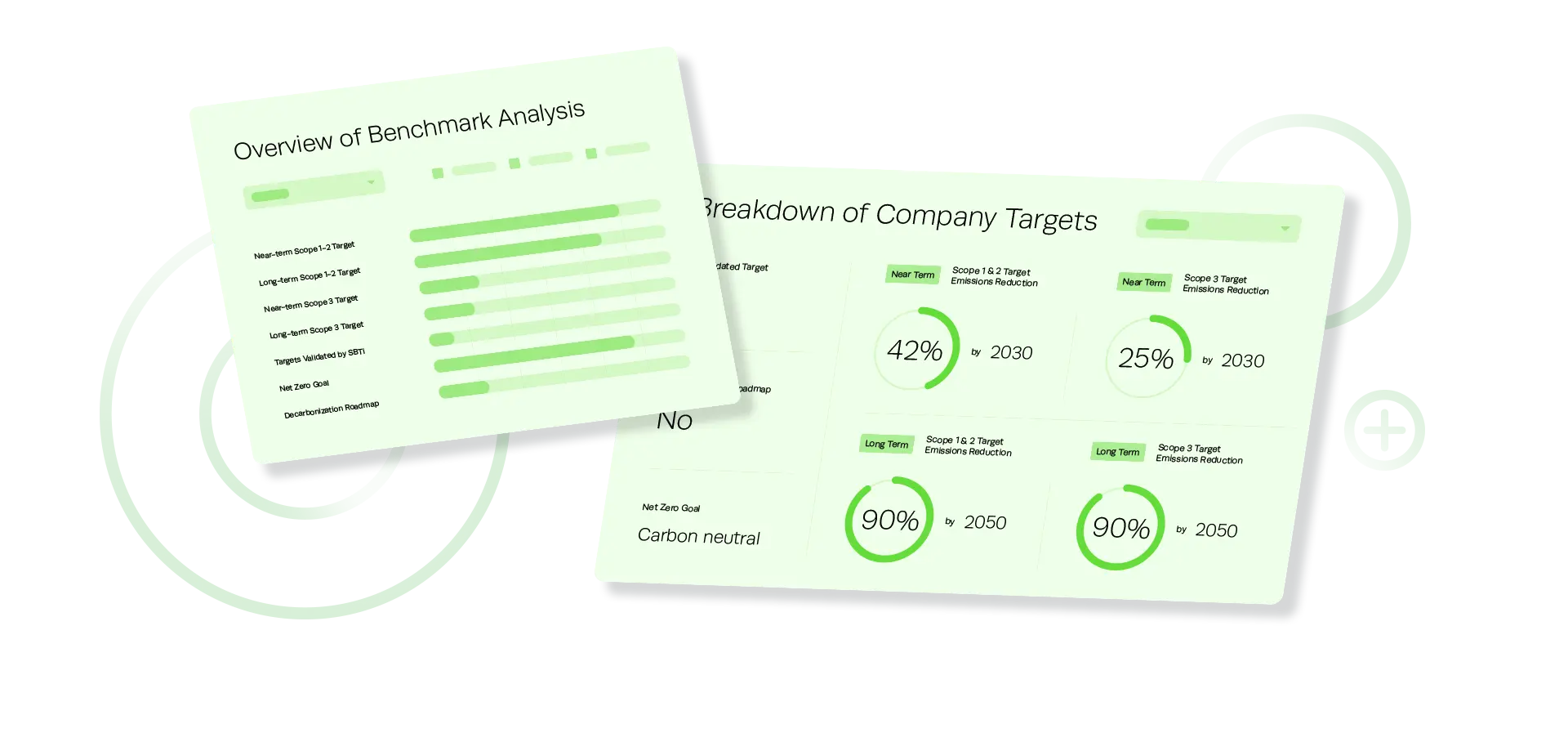
SBTi’s near-term target criteria
A near-term emissions reduction target should include:

Boundary
Must include both Scope 1 and Scope 2 emissions.

Timeframe
Targets span from five to ten years.

Level of ambition
Scope 1 and Scope 2 targets must be aligned with a 1.5°C decarbonization pathway.

Scope 3 inclusion
If a company’s Scope 3 emissions are greater than 40% of total emissions, they must set a Scope 3 target.

Review
Targets must be reviewed and, if necessary, recalculated and revalidated, at least every 5 years.
How to set an SBTi target
Measure Scope 1, 2, and 3 emissions in alignment with the GHG Protocol.

Choose SBTi-approved target methods (absolute contraction, sectoral decarbonization, FLAG).

Prepare formal submission in SBTi portal and submit for validation.

Embed approved targets into strategy, frameworks, and communications.

Reassess targets every 5 years, or sooner if operations materially change.

Deliverables Designed for Success
Customized emissions reduction plan with near-term and long-term targets
Talk to our experts
Support with SBTi submission and target validation, including submission preparation and ongoing support during SBTi validation process
Customized emissions reduction plan with near-term and long-term targets


Companies with validated SBTi targets send a clear signal: we’re committed to creating long-term value in a decarbonized economy.
Annie Roberts
Senior Vice President - Climate ConsultingCommon Questions about SBTi
Science-based targets are in line with what climate science deems necessary to achieve the goals of the Paris Agreement and limit global warming to 1.5°C above pre-industrial levels.
Science-based targets are validated by the Science Based Targets Initiative (SBTi). The SBTi began as a partnership between CDP, the United Nations Global Compact (UNGC), the World Resources Institute (WRI), and the World Wide Fund for Nature (WWF).
Typically 30 to 90 days, depending on data availability, company size, and the complexity of emissions sources.
SBTi complements them. Targets validated by SBTi strengthen your climate disclosures, improving scores and credibility, and building trust with external stakeholders regarding your company’s commitment to climate action.
You must integrate them into corporate strategy, disclose them publicly, and track/report progress annually. Regular reviews ensure continued alignment with science.
Let's start a conversation.
related Services
Explore what else G&A can offer



Understand what’s shaping sustainability.
Dive into blog posts that break down trends and emerging issues.
Explore the Blog
 November 2025