

Keeping Up With Climate Disclosures
California’s Climate Disclosure Laws require companies to provide transparent reporting on greenhouse gas emissions and climate-related financial risks, setting a precedent for rigorous climate accountability in the U.S.

Meet regulations with our suite of services
 California SB 253
California’s SB 253 requires entities doing business in California with revenue greater than $1 billion to disclose their Scope 1, 2, and eventually Scope 3 greenhouse gas (GHG) emissions. Disclosures for Scope 1-2 emissions begins in 2026 for FY2025 data, with Scope 3 disclosures beginning in 2027 on FY2026 data. Entities subject to SB 253 will also need to obtain limited assurance over their Scope 1-2 emissions, starting with the first set of disclosures in 2027. Entities are not required to obtain limited assurance over their Scope 3 GHG emission until 2030.
 Scope 1-2 GHG Emissions Inventory
  Scope 3 GHG Emissions Inventory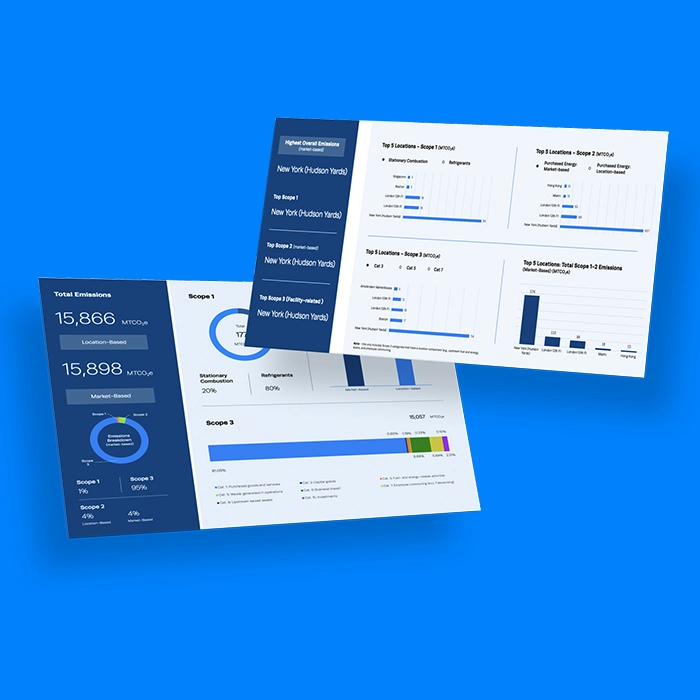
 California SB 261
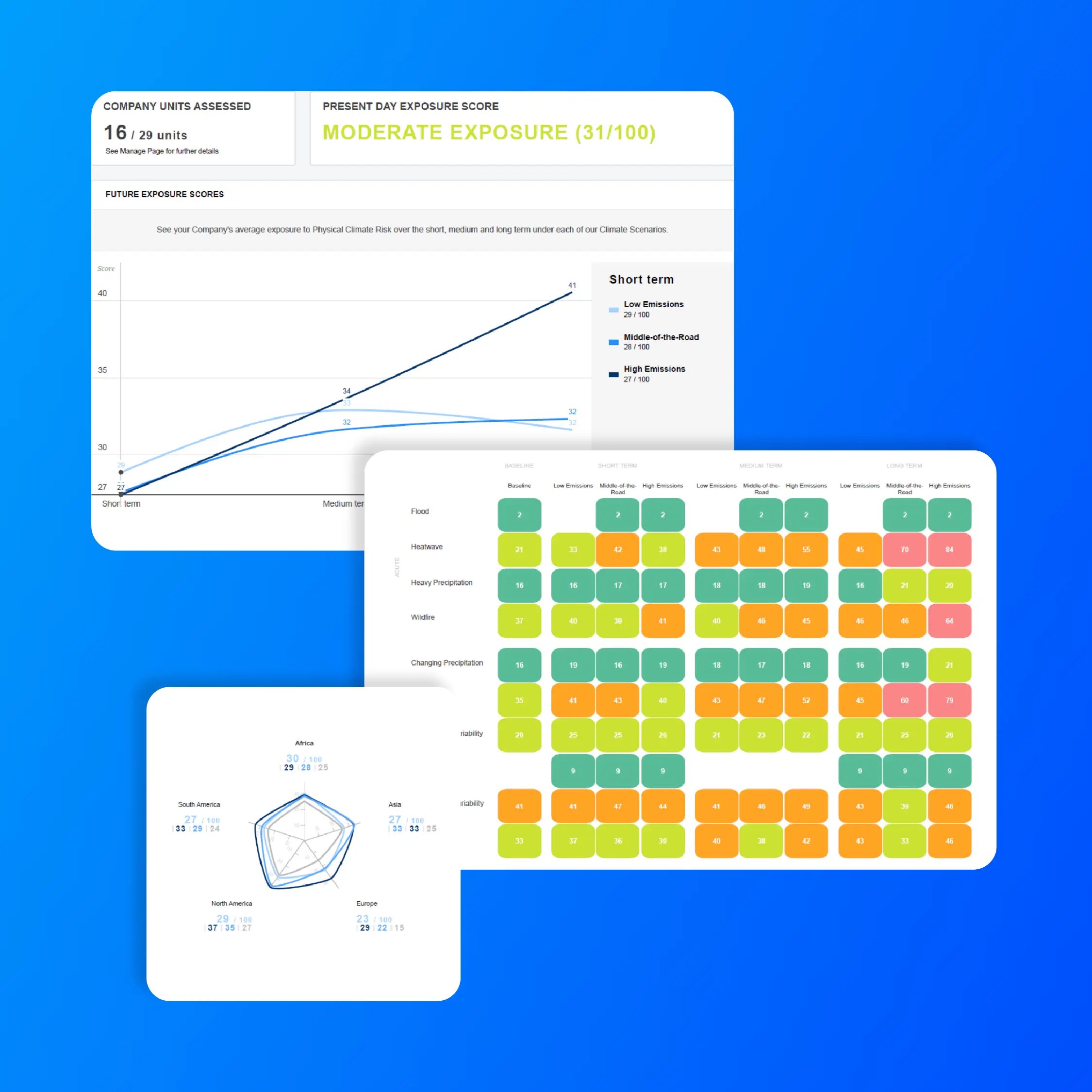
California’s SB 261 Climate-related Financial Risk Act requires entities doing business in California with revenues greater than $500 million to provide biannual climate-related financial risk reports and publicly disclose this report on their website. The reports must be produced in alignment with the recommendations from the Task Force on Climate-Related Financial Disclosures (TCFD), which have been incorporated into the IFRS ISSB S2.
 Climate Risks and Opportunities Assessment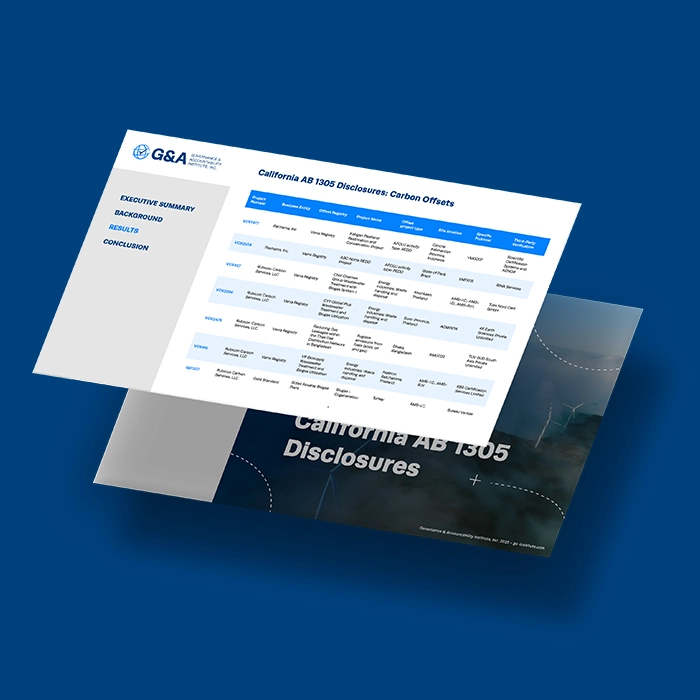
 California AB 1305
California’s AB 1305 enacts additional disclosure requirements for all entities operating within the state of California that buy or use voluntary carbon offsets and make climate-related claims (e.g., net zero emissions, carbon neutral, or emissions reductions).

Specialized Tools & Partners
We combine our in-house expertise with leading carbon accounting and ESG reporting software solutions, allowing us to offer a fully integrated climate disclosure support pathway that merges our high-touch advisory services with cutting-edge technology.


Understand when SB 253, SB 261, and AB 1305 will affect you

California’s new climate disclosure laws mark a turning point, requiring companies to be transparent about emissions and climate-related risks. Paying attention now not only ensures compliance but also positions businesses as leaders in accountability and resilience.
Annie Roberts
Senior Vice President - Climate ConsultingUnderstanding the California SB Laws
California’s SB 253 will require entities doing business in California with revenue greater than $1 billion to disclose their Scope 1, 2, and eventually Scope 3 greenhouse gas (GHG) emissions. Disclosures for Scope 1-2 emissions will begin in 2026 for FY2025 data, with Scope 3 disclosures beginning in 2027 on FY2026 data.
Entities subject to SB 253 will also need to obtain limited assurance over their Scope 1-2 emissions, starting with the first set of disclosures in 2026. Entities are not required to obtain limited assurance over their Scope 3 GHG emission until 2030.
We recommend starting the GHG inventory for the prior year as soon as the year concludes. This way you can be ready to submit your inventory to CARB in Q3.
California’s SB 261 Climate-related Financial Risk Act requires entities doing business in California with revenues greater than $500 million to provide biannual climate-related financial risk reports and publicly disclose this report on their website. The reports must be produced in alignment with the recommendations from the Task Force on Climate-Related Financial Disclosures (TCFD), which have been incorporated into the IFRS ISSB S2.
Companies must include the four overriding principles informed by TCFD: governance, strategy, risk management, and metrics & targets
Reports must contain a statement on which reporting framework was applied and which recommendations and disclosures have been compiled and which have not
Companies must provide a short explanation if certain recommendations/disclosures were not included and plans to include in the future.
Companies need to analyze their physical and transition risks (in accordance to TCFD guidelines) for their climate-related risk assessment.
AB 1305 enacts additional disclosure requirements for all entities operating within the state of California that buy or use voluntary carbon offsets and make climate-related claims (e.g., net zero emissions, carbon neutral, or emissions reductions).
Let's start a conversation.
Related Services
Explore what G&A can offer
Understand what’s shaping sustainability.
Dive into blog posts that break down trends and emerging issues.
Explore the Blog
 April 2025